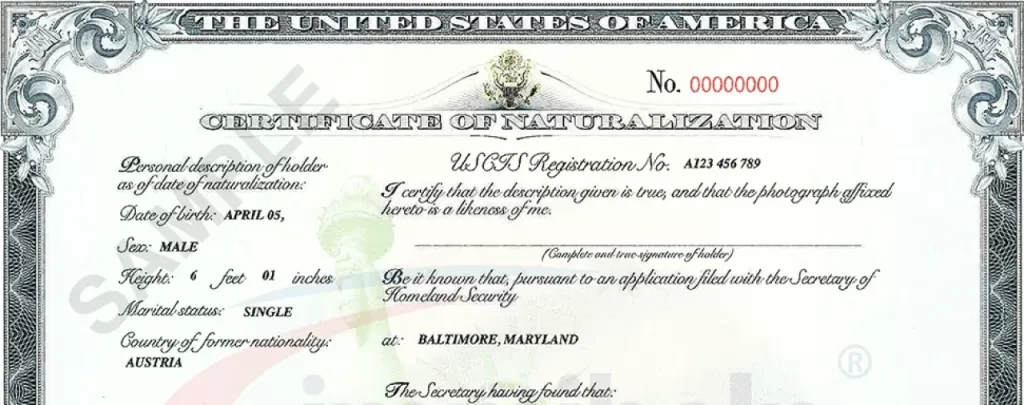
Your great-grandfather left Lithuania in 1913 and became a U.S. citizen in 1936. Does his naturalization after Lithuania declared independence in 1918 mean that your family qualifies for Lithuanian citizenship by descent?
Not necessarily. Emigration and naturalization are different events, and the dates tell only part of the story. The important question is whether your ancestor ever held citizenship of the Republic of Lithuania.
Emigration and Naturalization: Two Different Events
Emigration is when someone leaves their home country. Naturalization is when they later become a citizen of another country. The two events may be decades apart.
| Event | Year |
| Great-grandfather born in Lithuania | 1895 |
| Emigrated to the United States | 1913 |
| Lithuania declared independence | 1918 |
| Naturalized as a U.S. citizen | 1936 |
His 1936 U.S. naturalization does not establish that he was a Lithuanian citizen. To understand eligibility, we must examine his Lithuanian citizenship history separately.
Why 1918 Matters for Lithuanian Citizenship by Descent
Lithuania declared the restoration of its independent state on February 16, 1918. Being born in Lithuania before that date did not, by itself, mean holding citizenship of the independent Republic of Lithuania.
Under the current Lithuanian citizenship restoration framework, a central requirement is that the relevant ancestor held citizenship of the Republic of Lithuania before June 15, 1940.
Under Lithuanian law, it is sufficient that the ancestor held Lithuanian citizenship at any time before June 15, 1940, unless there was a formal decision under Lithuanian law that they had lost it. A later U.S. naturalization therefore does not, by itself, rule out eligibility – but it does not prove Lithuanian citizenship either. In Lithuanian law, this route is called reinstatement of citizenship – often described as “citizenship by descent.”
If your ancestor left before independence and never later acquired Lithuanian citizenship, a U.S. naturalization cannot create it. However, emigration before 1918 should not automatically be treated as proof that the ancestor never became a Lithuanian citizen. Some emigrants living abroad were recognized as Lithuanian citizens by registering with a Lithuanian diplomatic or consular office and obtaining a Lithuanian passport. Such cases require specific documentary evidence.
For the broader legal criteria, see our guide to Lithuanian citizenship by descent eligibility.
Does Naturalization After 1918 Mean Your Ancestor Retained Lithuanian Citizenship?
No – the naturalization date alone cannot answer that question. Consider three different family histories:
Scenario A: Emigration in 1907, U.S. naturalization in 1936
The ancestor left before the independent Republic of Lithuania existed. Unless there is evidence that they subsequently acquired Lithuanian citizenship, the 1936 naturalization date does not establish a basis for citizenship restoration.
Scenario B: Emigration in 1927, U.S. naturalization in 1936
The ancestor left after Lithuania became independent. This may be a more promising starting point, but emigration after 1918 alone does not prove Lithuanian citizenship. Their legal status and supporting records still need to be examined.
Scenario C: Emigration before 1918, with evidence of later Lithuanian citizenship
This situation requires individual legal analysis. If documents establish that the ancestor acquired citizenship of the Republic of Lithuania after independence, their earlier departure does not necessarily settle the eligibility question.
What If You Don’t Know When Your Ancestor Left Lithuania?
Many families know their ancestors came from Lithuania but cannot identify the exact year. That does not necessarily mean the research must stop. Start with the clues you already have:
- An approximate birth year and the dates and places where children were born.
- Names used in the family, including Americanized spellings, and the original town, village or parish.
- Passenger records, U.S. census entries, naturalization petitions, birth or marriage records, and family letters or passports.
These sources can help reconstruct a timeline, but dates and spellings may conflict. Most importantly, U.S. immigration and naturalization documents do not necessarily prove citizenship of the Republic of Lithuania. They may, however, be relevant for other parts of the process, such as documenting when the ancestor left Lithuania. Evidence of Lithuanian citizenship may need to be obtained from relevant Lithuanian historical records or other acceptable sources.
For example, a great-grandfather born in 1903 whose child was born in the United States in 1933 could have emigrated either before or after 1918. If you know only an Americanized first name and a vague Lithuanian connection, ask relatives for more identifying details before requesting targeted archival research.
Can You Still Qualify for Lithuanian Dual Citizenship?
Potentially, but eligibility for Lithuanian citizenship restoration and the right to retain another citizenship are separate legal questions.
If your ancestor held citizenship of the Republic of Lithuania before June 15, 1940, your family history may provide a basis for reinstatement. Whether you can also retain your U.S. citizenship depends on the specific exceptions established under Lithuanian law. In many cases involving an ancestor who held Lithuanian citizenship before June 15, 1940 and left Lithuania before March 11, 1990, Lithuanian law allows descendants to keep their U.S. citizenship – but this must be confirmed for each family.
For more detail, read when Lithuania allows dual citizenship.
What Should You Do Before Applying?
Begin with three questions: when did your ancestor leave Lithuania; did they ever hold citizenship of the Republic of Lithuania; and what reliable documents or identifying details do you have?
You do not need every answer before seeking guidance. Even a few reliable details may help establish whether further research is worthwhile. However, an assessment needs enough information to identify the ancestor and investigate their history.
If you know your ancestor’s approximate emigration period and your relationship to them, explore our Lithuanian citizenship by descent legal services and free preliminary eligibility assessment. Otherwise, start by gathering family details and return when you have a clearer starting point.
Frequently Asked Questions
My ancestor immigrated before 1918 but naturalized afterward. Can I qualify?
Not on the U.S. naturalization date alone. You need evidence that the ancestor held citizenship of the Republic of Lithuania before June 15, 1940. Most people who left before Lithuanian independence did not automatically acquire that citizenship, although individual historical exceptions may exist.
Does a U.S. naturalization certificate prove Lithuanian citizenship?
No. It may help reconstruct your family history, but does not automatically establish Lithuanian citizenship.
Can I apply if my great-grandparent was Lithuanian?
Potentially. Great-grandchildren are within the descendant generations covered by the citizenship reinstatement provisions (children, grandchildren and great-grandchildren); later generations are not. However, the ancestor must have held Lithuanian citizenship before June 15, 1940, and other legal and documentary requirements also apply.
Is Lithuanian ancestry enough to obtain a passport?
No. Family stories, ancestry or DNA results do not automatically establish citizenship or a right to a Lithuanian passport.
Your Family History Deserves an Accurate Assessment
Your family’s records may hold meaningful clues, even when some dates are missing. At IN IURE, we help families distinguish what their history suggests from what the law and available documents can establish—so they can make informed decisions about the next step.

Dainius Ambrazaitis
Head of the Citizenship Practice at IN IURE Law Firm, Vilnius, Lithuania
Start your journey now
Restoring Lithuanian citizenship is a meaningful step – whether to reconnect with your heritage, access EU opportunities, or secure your family’s future.
Book consultation

